Poszycia membranowe dla biogazowni to niezbędny element każdej instalacji, odpowiadający za szczelność fermentora, magazynowanie biogazu oraz ochronę przed warunkami atmosferycznymi. Bioplan, z ponad 40-letnim doświadczeniem w produkcji plandek i membran, oferuje kompleksowe pokrycia membranowe dla biogazowni, zapewniając trwałość, szczelność oraz profesjonalny serwis i wymianę pokryć.
1. Bioplan’s experience – a trusted partner in membrane coverings for biogas plants
- Over 40 years of tarpaulin and membrane production
Bioplan, operating on the market for four decades, specialises in the selection of materials and production techniques. The result is membrane coverings for biogas plants with the highest strength parameters, adapted to the individual requirements of biogas installations. - A comprehensive approach to the customer
From design and installation to subsequent servicing, Bioplan takes into account the investor’s needs, including fastening systems, thermal insulation and anti-condensation protection. Thanks to Polish technologies, membranes for biogas plants are produced with short lead times and competitive costs. - Service and replacement of membrane coverings
Bioplan provides professional service for coverings: regular inspections, repairs and complete replacement of membrane coverings in case of wear or damage. The service team responds quickly, minimising downtime and maintaining the highest quality standards. - A trusted choice for biogas plant covers
References from numerous domestic and international projects confirm that Bioplan is a reliable partner. Bioplan membrane covers are tested in extreme climatic conditions, guaranteeing trouble-free operation of the installation for many years.
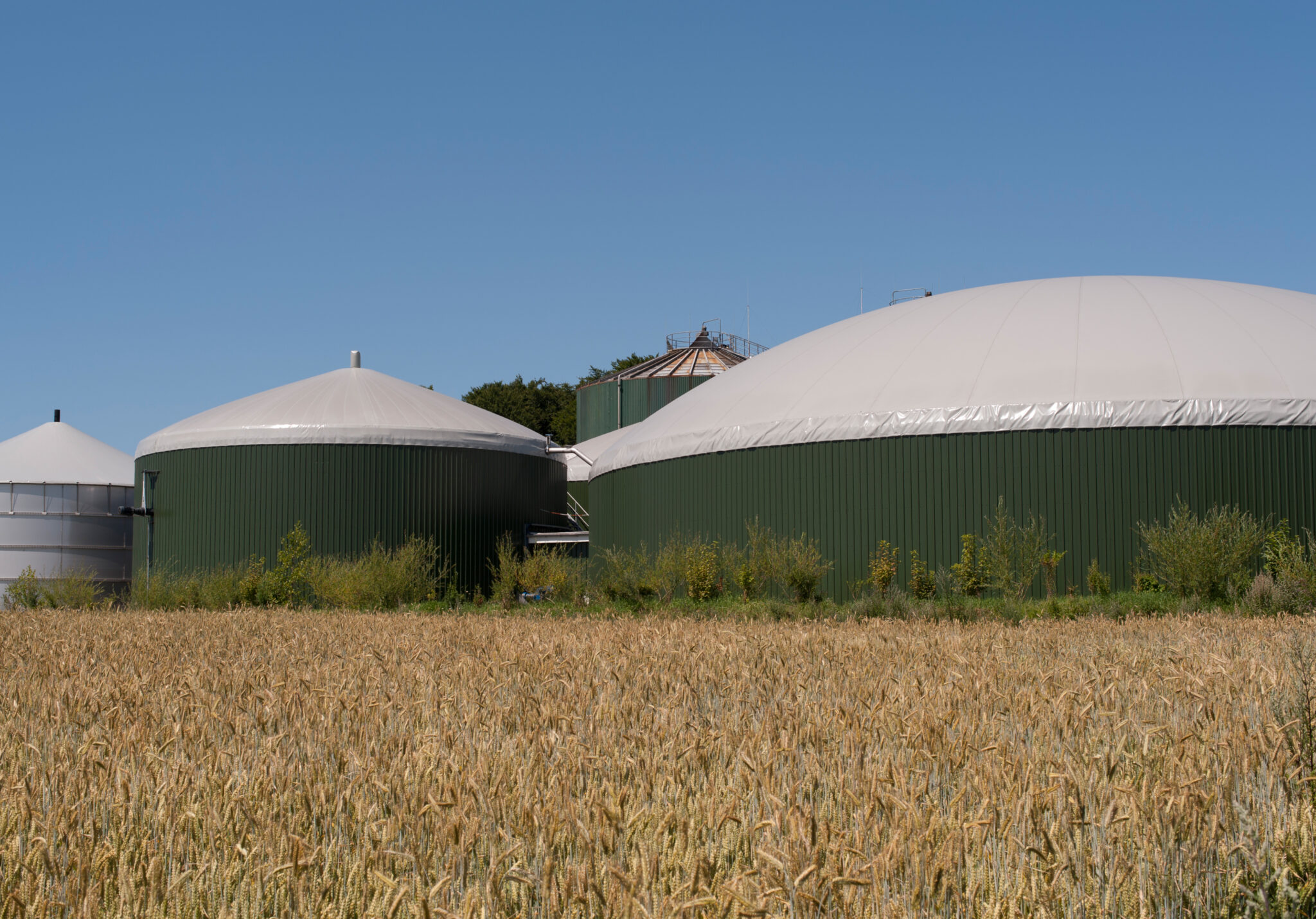
2.The Role of Membrane Coverings in a Biogas Plant
- Hermetic sealing of the fermenter and gas storage tank
Membrane coverings for biogas plants create a gas-tight environment in the fermentation chamber and on the gas storage tank (gas holder), eliminating biogas losses and protecting the system from contamination.
Constant pressure in the storage tank ensures stable biogas production, while the applied membrane coverings maintain tightness parameters even under variable pressure conditions.
- Protection against weather conditions
Membranes used in biogas plants are characterized by high resistance to UV radiation and adverse weather conditions, minimizing heat losses and ensuring uninterrupted fermentation processes.
UV stabilizers and a membrane design incorporating a condensate drainage layer prevent corrosion and material degradation, significantly extending the service life of the cover.
- Process and environmental safety
Bioplan membrane coverings are integrated with leak detection systems, enabling rapid identification of damage and immediate intervention.
Reducing uncontrolled emissions of methane and sulfur compounds lowers greenhouse gas emissions and increases operational safety.
Types of membranes used in biogas plants
Single-layer biogas covers
- Made of high-quality PVC or PE (thickness 0.8–1.0 mm), laser-welded
- Designed for smaller installations or as temporary solutions in larger biogas plants
- Advantages: easy installation, low investment cost, short delivery times
Double-layer membranes with a condensation chamber
- Outer layer of UV-stabilized PVC (approx. 0.9 mm) and inner gas-tight PE layer (0.7 mm)
- The space between layers drains condensate, extending membrane lifespan and protecting the supporting structure from corrosion
- The second layer acts as a backup barrier, reducing the risk of failure if the outer layer is damaged
Inflated membranes (inverted balloon)
- The lower edge of the membrane is fixed to a ring, while the upper part forms a cushion under biogas overpressure
- Enable control of variable gas pressure, which is beneficial in cases of unstable biogas production
- Require systems to maintain constant overpressure and protection against wind and snow loads
Membranes integrated with thermal insulation
- Intended for harsh climate locations – PIR layer or polyurethane foam beneath the gas-tight membrane
- Maintain optimal temperature in the fermentation chamber, shorten start-up time, and stabilize biogas production
Key technical parameters of Bioplan membranes
Tightness and gas impermeability
- Methane permeability coefficient: < 5 cm³/m²·24 h
- Welds made using laser or ultrasonic technology, each subjected to individual quality control
UV resistance
- UV stabilizers class UV 6, ensuring retention of at least 85% of mechanical properties after 5 years of exposure
- Membranes tested with accelerated xenon aging tests (5,000 h)
Mechanical strength
- Tensile strength: minimum 400 N/5 cm (ISO 527)
- Puncture resistance: ≥ 150 N (EN 1870-2)
- Standard thickness: 0.9 mm (custom options from 0.8 mm to 1.2 mm available on request)
Chemical resistance
- Materials resistant to hydrogen sulfide, carbon dioxide, and sulfur compounds
- Coating with active antibacterial agents protecting against microbiological degradation of the membrane
Flexibility across a wide temperature range
- Flexibility from –35 °C to +80 °C, eliminating the risk of cracking during extreme temperature fluctuations
- Elongation at break: ≥ 220% (ISO 527), compensating for stresses during tank filling
Design and installation of Bioplan membrane coverings
Before designing a membrane covering for a biogas plant, a detailed assessment of local conditions is required, including analysis of snow and wind loads. This involves site-specific climate measurements followed by structural calculations of both the supporting framework and the membrane itself, allowing precise determination of the forces the structure must withstand. Annual temperature variations and dynamic loads resulting from filling and emptying cycles are also considered to select the optimal material thickness and structure, ensuring weather resistance and operational stability.
Bioplan offers several proven fastening systems tailored to the specific requirements of each project. A concrete ring with aluminum wedges ensures uniform membrane tension and eliminates folds, contributing to long-term tightness. For installations requiring adjustable tension during operation, steel rails with tensioning straps are used, providing additional protection against localized snow loads. In modernized biogas plants where structural intervention must be limited, Bioplan applies ground anchors and temporary fastening systems, enabling stable membrane installation without rebuilding the foundation.
Installation and tightness control are carried out in two stages: at the Bioplan factory and on site. Cutting and welding of membranes are performed using certified laser equipment, ensuring precision and durability of joints. After installation, tightness tests are conducted, including thermal imaging inspection, methane detector measurements, and pressure testing prior to commissioning. In double-layer membrane systems, all edges of both layers are carefully sealed, and the condensation chamber is inspected to prevent moisture accumulation.
To ensure proper condensate drainage and protection against its negative effects, Bioplan uses a perforated separation layer beneath the membrane in areas particularly exposed to moisture condensation, preventing direct contact between water and the membrane surface. Additionally, drainage channels are installed every five meters to redirect condensate outside the tank, eliminating point loads and the risk of localized material wetting. In locations where temperatures may drop below 0 °C, the membrane is further supported by heating systems and internal insulation, preventing condensate freezing and protecting the membrane from low-temperature damage.
Operation, service, and maintenance of Bioplan coverings
The inspection schedule and membrane condition monitoring include annual external inspections, during which specialists assess material stress, check discoloration caused by UV exposure, and look for microcracks that could lead to loss of tightness over time. At the same time, the drainage system is monitored, with thorough checks of channel clearance and edge sealing to ensure uninterrupted condensate removal and protection against excessive moisture. Regular measurements of internal gas tank pressure are also performed to enable early detection of irregularities, along with inspections of safety valves and fittings to ensure safe operation of the entire installation.
The repair and replacement procedure begins with assessing the extent of damage. Minor cuts or abrasions are repaired using service patches made of identical material, ultrasonically welded to ensure a durable bond. If damage exceeds 20 cm in length, replacement of the entire membrane segment is required to maintain full tightness. Every 10–12 years, depending on climatic conditions and operational intensity, Bioplan offers a complete membrane replacement service, allowing investors to maintain installation reliability and safety without managing the process independently.
To maintain cleanliness and protect the membrane surface, organic debris such as leaves and branches, as well as technological dust deposits, are regularly removed using soft brushes or low-pressure water jets, minimizing the risk of material damage. Antistatic coatings applied to the membrane surface reduce dirt adhesion, facilitate rainwater runoff, and lower the risk of corrosion of the supporting structure. Periodic application of antibacterial agents based on titanium dioxide prevents the growth of microorganisms that could weaken the membrane structure. As a result, the membrane remains in optimal technical condition, ensuring long-term and trouble-free operation of the biogas plant.
Benefits of Bioplan membrane coverings for biogas plants
Thanks to the tightness and thermal insulation of Bioplan membranes, biogas plants can maintain optimal fermentation conditions, resulting in higher methane yields and a more stable production process. Reduced gas losses and minimized heat leakage lead to faster return on investment through improved energy efficiency.
Durable, UV-stabilized, and chemically resistant materials used in Bioplan membrane coverings extend replacement cycles to 10–12 years, significantly reducing overall operating costs. In addition, fast and professional repairs and membrane replacements performed by Bioplan service teams minimize production downtime and substantially reduce technical service expenses.
Precisely manufactured Bioplan membrane coverings minimize methane and sulfur compound emissions into the atmosphere, ensuring compliance with stringent environmental standards. Integrated leak detection systems enable immediate fault detection and repair, increasing operational safety and reducing the risk of failures or accidents during operation.
Summary
Choosing Bioplan membrane coverings means benefiting from over 40 years of experience in the production of tarpaulins and membranes, the latest welding technologies, and strict quality control. Precise material selection, optimized installation processes, and a full range of service offerings (regular inspections, repairs, membrane replacement) make Bioplan a trusted partner for any biogas plant. Our membrane coverings are distinguished by excellent tightness, resistance to weather and chemical factors, and the option to integrate thermal insulation—resulting in maximized efficiency, lower operating costs, and compliance with environmental requirements.
Contact Bioplan and choose professional membrane coverings for biogas plants, along with service and replacement solutions tailored to your needs.